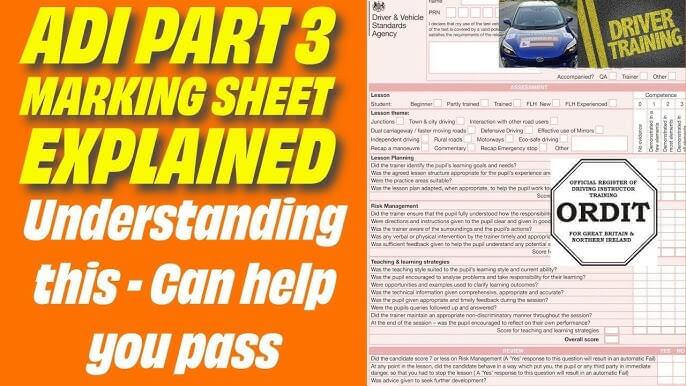
ADI Part 3: The 17 Competencies

Table of Contents
- ADI Part 3: The 17 Competencies — Properly Explained for Trainee Instructors
- ADI Part 3: The 17 Competencies
- 1. Did the trainer identify the pupil’s learning goals and needs?
- 2. Was the agreed lesson structure appropriate for the pupil’s experience and ability?
- 3. Were the practice areas suitable?
- 4. Was the lesson plan adapted, when appropriate, to help the pupil work towards their learning goals?
- 5. Did the trainer ensure that the pupil fully understood how the responsibility for risk would be shared?
- 6. Were directions and instructions given to the pupil clear and given in good time?
- 7. Was the trainer aware of the surroundings and the pupil’s actions?
- 8. Was any verbal or physical intervention by the trainer timely and appropriate?
- 9. Was sufficient feedback given to help the pupil understand any potential safety critical incidents?
- 10. Was the teaching style suited to the pupil’s learning style and current ability?
- 11. Was the pupil encouraged to analyse problems and take responsibility for their learning?
- 12. Were opportunities and examples used to clarify learning outcomes?
- 13. Was the technical information given comprehensive, appropriate and accurate?
- 14. Was the pupil given appropriate and timely feedback during the session?
- 15. Were the pupil’s queries followed up and answered?
- 16. Did the trainer maintain an appropriate non-discriminatory manner throughout the session?
- 17. At the end of the session – was the pupil encouraged to reflect on their own performance?
- ADI Part 3: The 17 Competencies Final Perspective for Trainees
- FAQs
ADI Part 3: The 17 Competencies — Properly Explained for Trainee Instructors
ADI Part 3: The 17 Competencies - If you’re preparing for ADI Part 3, here’s the truth: the examiner isn’t looking for a superstar performance. They’re looking for structured planning, calm safety management and clear teaching — done consistently.
The marking sheet from the Driver and Vehicle Standards Agency breaks the assessment into 17 competencies. Many trainees memorise them.
The stronger ones understand them.
If you want a structured, highly regarded breakdown of these standards, the ADI Part 3 & Standards Check guide from Driver Training Ltd is widely respected in the industry:
https://drivertrainingltd.com/products/adi-part-3-adi-standards
Now let’s go through each competency prop
ADI Part 3 Marking Sheet Explained

£19.95
ADI Part 3 Marking Sheet Explained "Become a better teacher and more confident of passing the ADI PART 3 TEST" Complete ADI Part 3 Standards Check Book. Colour Graphics, Photos, Explanations on Durable Gloss 120gsm Paper, Spiral Bound * Complete… read more
erly — in clear, practical language.
ADI Part 3: The 17 Competencies
LESSON PLANNING
This section answers one simple question:
Was this lesson deliberate and structured — or improvised?
1. Did the trainer identify the pupil’s learning goals and needs?
This is more than asking, “What do you want to do today?”
The examiner wants to see:
A short recap of the previous lesson
Identification of recurring weaknesses
Agreement on today’s focus
A clear link between past performance and today’s goal
Strong candidates make the pupil part of this process. Weak candidates announce the topic and move on.
A high-quality discussion might sound like:
“Last time your approach speed into roundabouts was inconsistent. Shall we focus on planning and speed control today?”
That shows awareness, structure and progression.
2. Was the agreed lesson structure appropriate for the pupil’s experience and ability?
This is about pitch and progression.
If the pupil is early-stage, your structure should include:
Clear briefing
Step-by-step build-up
High support
Lower complexity environments
If they’re test-ready:
Minimal prompting
Independent decision-making
Exposure to realistic traffic pressure
The examiner is asking:
Did you teach this pupil — or a generic imaginary one?
3. Were the practice areas suitable?
Area choice is not random.
The examiner will consider:
Traffic density
Junction complexity
Road type
Speed limits
Visibility
For example:
Teaching clutch control on a steep, congested hill start area may be excessive.
Teaching high-speed merging on empty side roads may lack realism.
High-scoring instructors choose areas that allow controlled challenge.
4. Was the lesson plan adapted, when appropriate, to help the pupil work towards their learning goals?
This is where flexibility shows professionalism.
If a pupil struggles:
Reduce complexity
Add more structured guidance
Revisit fundamentals
If a pupil excels:
Increase independence
Introduce more challenging traffic
Reduce prompts
Rigid lessons often score mid-range.
Responsive lessons score higher.
SAFETY & RESPONSIBILITY MANAGEMENT
This section carries weight because it protects the public.
The examiner is watching your awareness, judgement and timing continuously.
5. Did the trainer ensure that the pupil fully understood how the responsibility for risk would be shared?
This must be clear from the outset.
A strong start includes:
Explaining that the pupil is responsible for observation and control
Confirming you will intervene if necessary
Encouraging the pupil to speak up if unsure
If this conversation doesn’t happen, the examiner questions your professional control.
6. Were directions and instructions given to the pupil clear and given in good time?
Clarity prevents confusion.
Good instruction is:
Short
Early
Calm
Specific
Poor instruction is:
Late
Long-winded
Emotional
Overcomplicated
A strong instructor sounds measured — not rushed.
7. Was the trainer aware of the surroundings and the pupil’s actions?
This is about constant scanning.
The examiner observes whether you:
Check mirrors regularly
Look ahead beyond immediate hazards
Notice developing risks early
Monitor the pupil’s positioning and control
A passive passenger scores poorly.
A proactive safety manager scores well.
8. Was any verbal or physical intervention by the trainer timely and appropriate?
Intervention shows judgement.
The examiner will assess:
Did you step in too early?
Did you wait too long?
Was the intervention proportionate?
For example:
A gentle verbal cue may be enough.
Grabbing dual controls unnecessarily lowers marks.
Failing to act in a developing danger may fail the test.
Balance is everything.
9. Was sufficient feedback given to help the pupil understand any potential safety critical incidents?
Near-misses must become learning moments.
After a safety concern, strong candidates:
Explain clearly what happened
Identify the risk
Discuss how to prevent it next time
Check understanding
Weak candidates either overreact or ignore it.
The examiner wants calm, constructive correction.
TEACHING AND LEARNING STRATEGIES
This section separates instructors who talk from instructors who teach.
10. Was the teaching style suited to the pupil’s learning style and current ability?
You must adjust:
Pace
Language
Level of prompting
Support
Some pupils need diagrams.
Some need repetition.
Some need reassurance.
Some need challenge.
A one-size approach does not score highly.
11. Was the pupil encouraged to analyse problems and take responsibility for their learning?
Reflection builds independence.
High-quality instruction includes questions like:
“What was your plan there?”
“What would you change next time?”
“Why did that situation develop?”
If the instructor supplies all the answers, the pupil stays dependent.
12. Were opportunities and examples used to clarify learning outcomes?
Real traffic creates real teaching moments.
Strong instructors link events directly to objectives:
“That junction links back to what we discussed about early mirror checks.”
That reinforces learning rather than letting situations pass without discussion.
13. Was the technical information given comprehensive, appropriate and accurate?
Accuracy matters.
Incorrect explanations about:
Positioning
Speed selection
Sign meaning
Priority rules
…can damage your score.
High-scoring candidates explain clearly, correctly and at the right level for the pupil.
14. Was the pupil given appropriate and timely feedback during the session?
Feedback should be:
Balanced (strengths and improvements)
Linked to the lesson goal
Delivered at the right moment
Constant talking lowers quality.
Total silence lowers guidance.
Good feedback is deliberate.
15. Were the pupil’s queries followed up and answered?
Questions show engagement.
If a pupil asks:
“Why did that driver flash me?”
That’s an opportunity to deepen understanding.
Ignoring it suggests weak engagement.
16. Did the trainer maintain an appropriate non-discriminatory manner throughout the session?
Professional behaviour includes:
Respectful language
Controlled tone
Patience under pressure
Equal treatment
The examiner observes your demeanour constantly.
Professionalism supports safety.
17. At the end of the session – was the pupil encouraged to reflect on their own performance?
A structured close improves retention.
Strong endings include:
Pupil self-assessment
Instructor summary
Clear next steps
Link to future lessons
Rushed endings often cost marks.
ADI Part 3: The 17 Competencies Final Perspective for Trainees
The 17 competencies are not traps. They’re a framework.
If you:
Plan clearly
Manage safety calmly
Teach thoughtfully
Encourage independence
…you will perform well.
ADI Part 3 is not about perfection.
It is about demonstrating that you are ready to take responsibility for teaching members of the public to drive safely — and that is a responsibility the profession has always taken seriously.
Master the structure, and the confidence follows.
FAQs
Do I always have to ask the pupil what they want to do?
Yes — but it must be meaningful. A quick, structured discussion linking to the previous lesson shows professionalism.
How do I show structure clearly?
Brief → practice → recap. Keep it logical and progressive.
How early should I give instructions?
Early enough to allow safe decision-making without rushing.